Velkommen mine barn!

  • Reactive Impurities in CCS

    An update on our dynamic modeling framework

    Reactive impurities represent one of the least understood, yet potentially most critical challenges for large-scale deployment of carbon capture and storage (CCS). While CO2 purity specifications are becoming increasingly conservative, they are still not grounded in a mechanistic understanding of whenwhere, and why highly corrosive acids form in real CCS infrastructure.

    Since 2024, supported by Gassnova, we have been developing a physics-based, mechanistic modelling engine to predict chemical reactions between trace impurities in CO2-rich mixtures. Over the past six months, we have systematically compared our model against 9394 hours of experimental data published in the last decade by the Institute of Energy Technology (IFE).

    Reactive impurities in CCS must be understood before widespread deployment

    CO2 captured from different industrial sources inevitably contains trace amounts of impurities at the parts per million (ppm) level. Some of these impurities are chemically reactive and can interact in ways that are not captured by conventional purity specifications.

    Nitrogen dioxide (NO2) is a particularly problematic impurity that is prevalent in CO2 streams from a wide range of capture technologies. In the presence of water, NO2 forms nitric acid (HNO3), which is highly corrosive to carbon steel. If sulfur-containing species such as SO2 or H2S are also present, reactions between impurities can lead to the formation of sulfuric acid (H2SO4). If sufficient sulfuric acid forms in the gas-phase from chemical reactions, it will eventually precipitate out as an aqueous phase, which catalyzes further reactions and accelerates acid production.

    For a decade, experimental work on reactive impurities has been carried out at IFE in Norway. As early as 2014, experiments conducted at Kjeller in Norway demonstrated that highly corrosive acids precipitate from CO2 mixtures containing trace impurities. Mixtures of nitric and sulfuric acid were shown to compromise the integrity of carbon steel over surprisingly short time scales of months, or even weeks. These findings underline the importance of understanding not only if acids form, but where and under what conditions they precipitate in CCS infrastructure.

    Concern over acid formation is the basis for today’s extremely conservative CO2 purity specifications, such as those adopted in the Northern Lights project. In these specifications, the allowable NO2 concentration has lately been reduced to 1 ppm, which is even lower than the limit for food-grade CO2. Removing impurities to this degree is costly, and it remains unclear whether such limits are sufficient, or even necessary, to prevent acid formation under all operating conditions. For example, acids may still precipitate at even lower impurity levels if the temperature and pressure drop.

    At present, uncertainty around acid formation is not just a corrosion issue. It represents one of the remaining systemic risks that can halt cost-effective CCS deployment if efficient mitigation strategies are not developed.

    DynamicModel

    Why a dynamic modelling framework is needed

    Acid formation in CO2 pipelines and infrastructure is governed by a complex interplay of physical and chemical mechanisms. Impurities may adsorb onto pipeline walls, where surface reactions become important. Other reactions occur in the gas phase, while solids such as sulfur or salts may precipitate under certain conditions. If an aqueous acidic phase forms, it will act as a catalyst for additional reactions, rapidly increasing acid production.

    These processes are dynamic and strongly dependent on local conditions such as temperature, pressure, flow regime, mixing of streams, and transient water availability. Static impurity specifications or equilibrium-type models cannot capture these effects.

    A dynamic mechanistic modelling engine is therefore essential to:

    • Develop effective strategies for acid mitigation and handling
    • Interpret and understand experimental observations
    • Design targeted experiments that reduce uncertainty
    • Predict if and where acids will precipitate in real CCS infrastructure

    The Status on our modeling framework

    Development of our dynamic modelling framework for reactive impurities in CO2 streams started late 2024, following discussions with the Institute of Energy Technology (IFE), which highlighted the lack of predictive tools. Since then, we have made substantial progress.

    Our current framework is based on a physics-based thermodynamic description of reactive electrolyte systems, combined with state-of-the-art models for adsorption onto carbon steel surfaces. A comprehensive reaction network has been implemented, covering gas-phase, liquid-phase, and surface reactions, together with thermodynamic prediction of precipitation of relevant solid phases. Where experimental data are unavailable, reaction kinetics have been estimated using first-principles molecular methods.

    The modelling engine has been extensively validated against published experimental data from IFE. Using the exact same initial and boundary conditions as in the experimental rigs, and without tuning parameters to individual experiments, the model reproduces measured outlet concentrations and dynamic behavior. The figure below illustrates this by comparing measured water concentrations at the outlet of the experimental rig (markers) with model predictions (solid line), demonstrating an excellent agreement.

    In total, similar comparisons have been performed for 29 independent experiments, corresponding to 9,394 hours of operation of the experimental rig over the past ten years. For all published experiments conducted above 15 °C, the model reproduces the observed dynamic concentration profiles and predicts the onset of acid precipitation in agreement with experimental observations at IFE.

    This level of agreement indicates that the modelling engine captures the dominant physical and chemical mechanisms governing reactive impurities in CO2-rich systems, at least at higher temperatures, and that it has the potential to become a predictive basis for engineering analysis rather than as a case-specific fitting tool.

    An Update on Reactive impurities in CCS

    From dynamic modeling framework to practical engineering tool

    Experimental rigs at IFE typically use pipes with diameters on the order of a few centimeters, while real CO2 transport pipelines may be tens of times larger. In addition, experimental setups often involve continuous injection and removal of impurities, which differs fundamentally from pipeline transport or CO2 storage in tanks.

    To bridge this gap, we have translated our validated mechanistic model to representations of large pipelines, tanks, and other CCS infrastructure components. A beta version of this functionality has been implemented in our software platform, allowing reactive CO2 mixtures to be propagated through pipeline networks under realistic operating conditions.

    This enables identification of locations where acids may precipitate due to cooling, mixing of streams, or changes in flow conditions, effects that cannot be assessed using static specifications alone.

    The way forward – reducing uncertainty

    While the modelling framework has reached a level where it can reproduce existing experimental data, further work is required to reduce uncertainty in key reactions before the model can fully support high-confidence engineering decisions. The largest uncertainties are now associated with low-temperature conditions relevant for ship transport and certain storage scenarios.

    Addressing these gaps requires targeted experimental campaigns combined with continued model development. This is not incremental refinement, but work that directly determines whether CCS systems must rely on conservative over-design, or can be engineered for safety and cost-efficiency based on mechanistic understanding.

    Reactive impurities and acid formation remain one of the last unresolved challenges for large-scale CCS deployment. Mechanistic modelling, anchored in experimental data, is a necessary step toward overcoming this challenge and enabling CCS at the scale and cost required for meaningful climate impact.

  • First student pilot users of TP-Process

    Improving Energy Efficiency in CCS, Hydrogen and Energy systems

    Student insights from the first use of our cloud-based process simulator

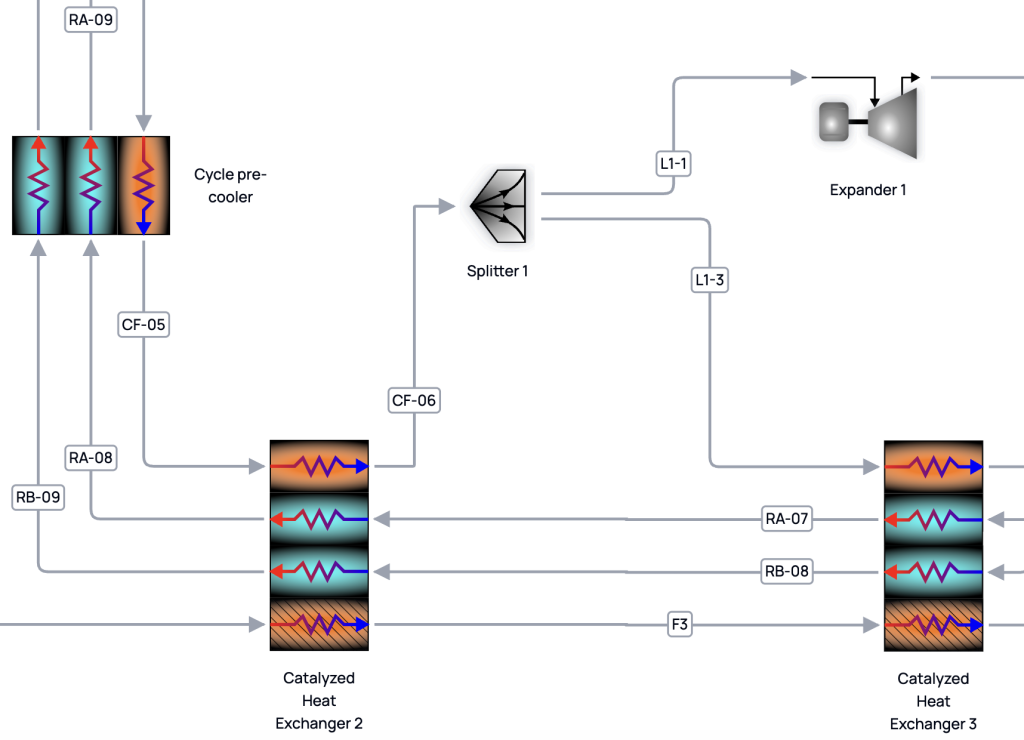
    As part of the upcoming beta release of our cloud-based steady-state process simulator, three student groups from across Europe have used TP-Process to analyze processes central to the energy transition. Their projects covered CO2 capture by liquefaction, industrial heat pump processes and hydrogen liquefaction.

    In this article, the students share what they worked on, their impressions of the software and, just as importantly, what needs improvement. Nearly half of the students had prior experience with established process simulation software, allowing for an early and honest comparison.

    One key reason to use TP-Process in these projects is its native integration of total exergy calculations directly into the simulation workflow. Unlike most commercial simulators where exergy analysis requires time-consuming post-processing, TP-Process makes energy-efficiency analysis automatic, immediate and iterative.

    What the students told us

    • TP-Process is already computationally fast, ergonomic, and easy to use
    • Integrated exergy analysis makes energy-efficiency evaluation fast and accessible
    • Collaboration through shared processes was used extensively
    • The checkpoint functionality makes it easy to keep track of and compare cases
    • Debugging and iteration felt easier and faster than in established tools
    • Several features (phase diagrams, checkpoints, shared use, missing process units) need refinement and improvement

    From theory to practice: three technologies, one software

    Despite working on very different technologies, all three groups used the same software to move from theoretical concepts to practical process insight. TP-Process allowed them to build processes, explore alternatives, and evaluate energy efficiency consistently across CCS, hydrogen, and industrial heat pump systems.

    “Exergy analysis helped us go beyond energy balances and actually understand where the real inefficiencies are,” says Cecilie, who worked on CO2 capture.

    “It changes how you think about process design.”

    A recurring theme across all projects was speed: moving quickly from model setup to results, and spending more time understanding the process than configuring, debugging, and post-processing.

    CO2 capture by liquefaction

    CO2_group2
    Image from left: Cecilie Ødegaarden Gjertsen (Norway), Gabin Wantelet (France) and Emma Simone Duprat (France)

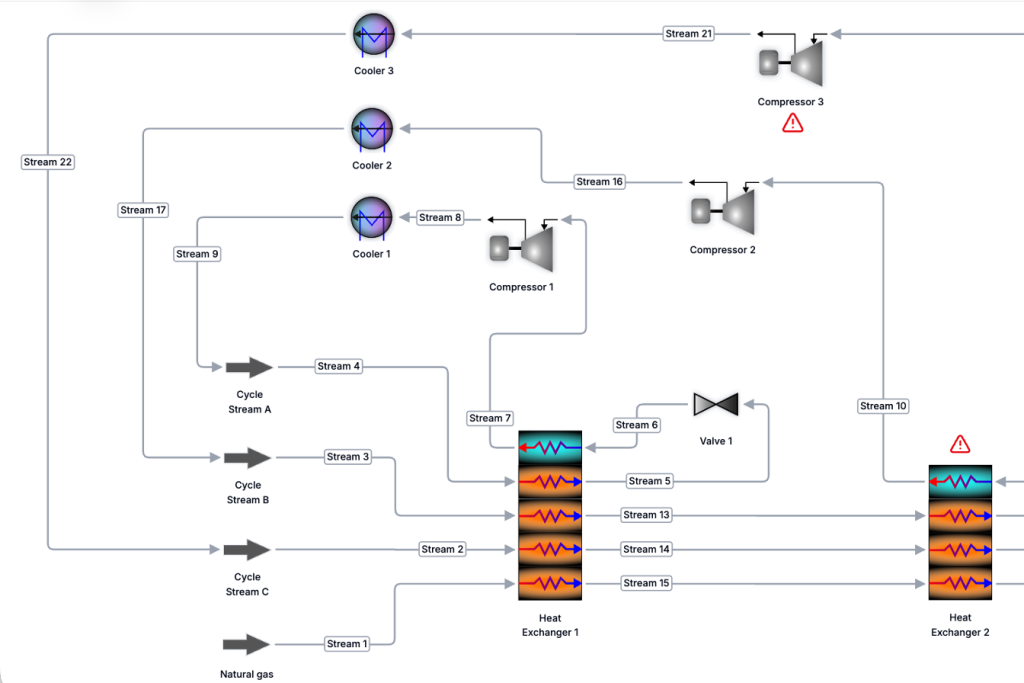
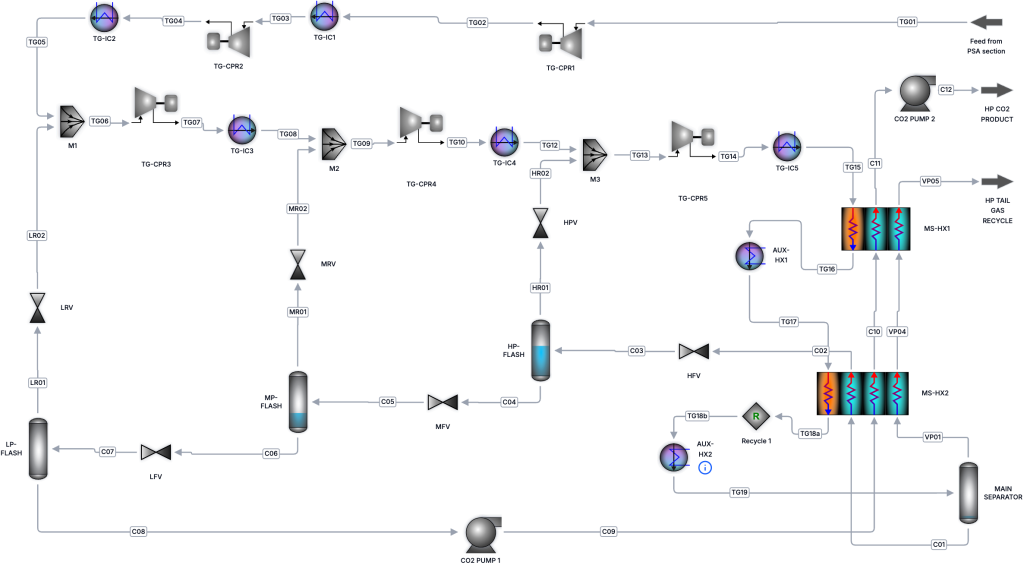
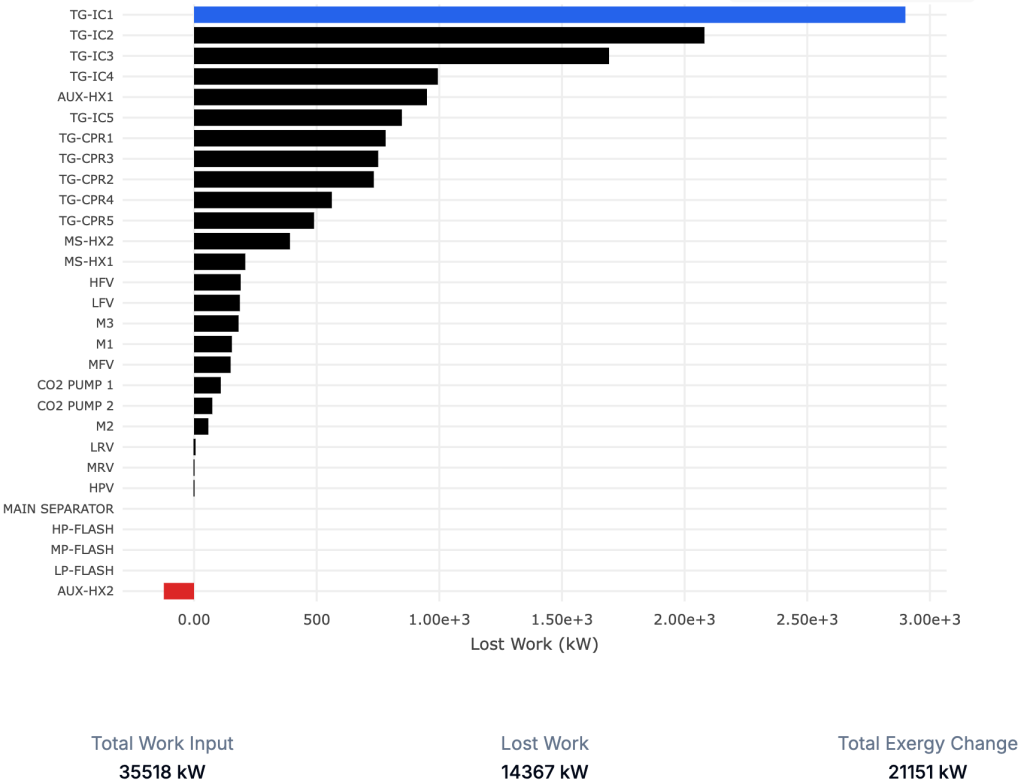
    The first group analyzed a CO2 capture process based on liquefaction, a promising but energy-intensive CCS technology. Using TP-Process, they identified that the cooler and compressor train contributed most to exergy destruction and proposed innovative improvements to increase the energy efficiency.

    Collaboration and workflow

    The group actively used the sharing functionality to collaborate on the same process model.

    “It was very ergonomic and convenient to be able to share the process,” says Emma.

    “It allowed us to review and contribute to each other’s work instead of working separately.”

    They noted that switching between lead user sometimes involved some delay and they encountered several bugs when using the functionality, reflecting the early-stage nature of the collaboration features.

    Ease of use and calculation speed

    “I don’t come from this field, and for a first attempt, TP-Process made it very easy to get started,” says Gabin.

    “The interface is modern and interactive, and calculation times are very short.”

    Emma highlights how quickly models could be built and accessed:

    “Setting up unit operations was fast, and working directly through a web browser made the workflow smooth and efficient.”

    Limitations and comparison to established tools

    Some limitations became visible for more advanced setups.

    “Certain components, such as strippers and adsorbers are not yet available,” notes Cecilie.

    “Adding more unit operations would make advanced CO2 capture modeling easier.”

    Both Emma and Cecilie had prior experience with established simulators and found the new workflow noticeably lighter.

    “TP-Process requires much less setup before you can actually start working,” says Emma.

    “And it’s faster and easier to debug,” adds Cecilie.

    Industrial heat pump processes (CERN)

    Jan
    Image: Jan Bengsch (Germany)

    Jan, who has previously worked in SINTEF, is now pursuing a PhD at NTNU. He worked on an industrial heat pump process related to CERN applications. His focus was on early-stage design and exergy-based prioritization.

    Early design and learning

    “It was easy to generate steady-state simulations quickly,” Jan explains.

    “Relatively little information was required before I could start exploring cycles.”

    He sees clear long-term value:

    “In its current state, I can use TP-Process very well for initial heat-pump design, and I could include exergy destruction studies in my PhD.”

    Areas for improvement

    “The phase-diagram functionality did not work as intended for my use case,” Jan notes.

    “I used a different tool for that part, but improving this would make the workflow more complete.”

    Hydrogen Liquefaction

    H2_group
    Image: Pol Estany Obiols (Spain) and Xavier Excaler Pedragosa (Spain)

    Hydrogen liquefaction is highly energy-intensive, and Xavier and Pol focused on understanding where the largest losses of useful work occur. Their analysis showed that cryogenic cooling and compression dominated the exergy destruction, and they proposed improvements to the process.

    Clarity and iteration

    “The process representation is very clear, and implementing it is straightforward,” says Pol.

    “You can get all the data you need, especially exergy and lost work, even for complex processes.”

    Xavier highlights the interface:

    “The drawings are intuitive, the error information is useful, and you don’t need to program anything.”

    They encountered some solver-related challenges and bugs.

    “When initial conditions need to be changed, it can be difficult to know which values to use,” says Xavier.

    They also made extensive use of checkpoints.

    “The checkpoint feature was very useful for comparing and keeping track of cases,” he adds.

    “Once we understood how to use it safely, it became an important part of our workflow.”

    Key takeaways from the first pilot

    Across the projects, the students aligned on several points:

    • Fast setup and iteration allowed them to focus on understanding and improving processes
    • Integrated exergy analysis was a major advantage for analyzing energy efficiency
    • Debugging felt more transparent and easier than in established tools
    • Collaboration through shared models was used extensively.
    • Checkpoints enabled effective comparison of different cases
    • Some features (phase diagrams, checkpoints, missing process units, shared use) need refinement and improvement.

    Looking ahead

    These projects are part of the preparations for our upcoming pilot release, where 15 invited users will gain access to TP-Process starting February 1st. The students’ work demonstrates how cloud-based steady-state simulation and exergy analysis can enable fast, collaborative, and insightful process evaluation for CCS, hydrogen, and industrial energy systems.

  • Dry Ice: When Does It Form and Why It Matters

    The formation of solid CO2, commonly known as dry ice,  is a critical safety concern in carbon capture and storage (CCS), as well as in LNG, cryogenic gas processing and other low-temperature applications.

    When temperatures drop sufficiently, CO₂ can transition into a solid phase. This can occur directly from the gas phase at low pressures, or from the liquid phase at higher pressures. The exact conditions depend strongly on pressure, temperature and mixture composition.

    Why dry ice formation is a safety risk

    The formation of solid CO2 can lead to several serious operational and safety challenges:

    • Blockage of critical equipment, such as vent lines and pressure relief systems
    • Mechanical damage, if solid CO2 detaches and accelerates in the flow
    • Pressure surges or pipeline rupture, caused by local plugging or sudden phase changes

    Because these events can develop rapidly, dry ice formation must be carefully assessed already in the design and safety analysis phase.

    Typical scenarios where dry ice can form

    Dry ice formation is most often triggered by rapid cooling events, for example:

    • Depressurization during pipeline shutdowns, ruptures or safety valve activation, where the Joule–Thomson effect causes rapid temperature drops
    • Loss of temperature control in storage tanks
    • Well operations, such as startup, shut-in or blow-out scenarios, where uncontrolled cooling may occur

    In CCS injection wells, dry ice formation can lead to overpressure, loss of injectivity and potential wellhead damage.

    The importance of accurate thermodynamic modeling

    Predicting when solid CO2 forms is not straightforward. The formation limits depend on the full mixture composition, and accurate predictions require:

    • A suitable Equation of State for both fluid and solid phases
    • A robust phase equilibrium algorithm
    • Careful selection of model combinations

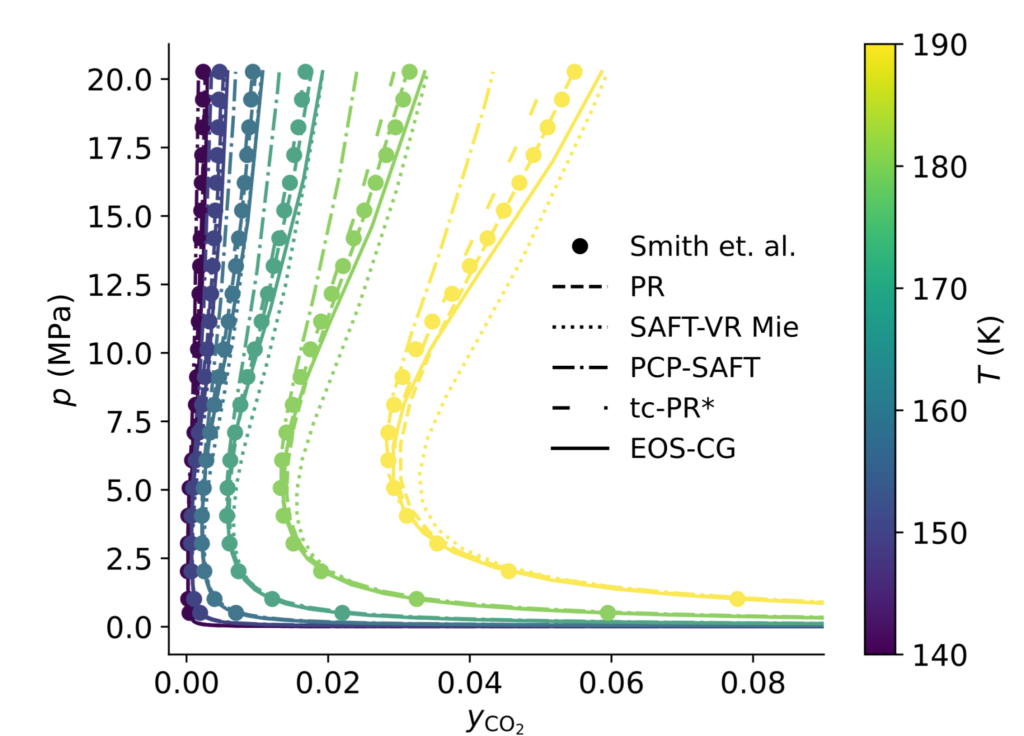
    In a recently published study, ThermoPhys in collaboration with PhD-candidate Tage Maltby have evaluated a wide range of thermodynamic model combinations against experimental data. The results show that while some models predict dry ice formation with high accuracy, others deviate significantly and should not be used for safety-critical calculations.

    From research to practical engineering tools

    The most accurate model combinations identified in the study has now been incorporated as default options for dry ice predictions in TP-Cloud, ThermoPhys’ cloud-based thermodynamic software.

    TP-Cloud enables engineers to:

    • Predict dry ice formation limits for CCS and natural gas mixtures
    • Quantify model uncertainty
    • Perform safety-relevant phase behavior calculations with confidence

    The software has recently been tested by its first users, and further updates will be announced soon.

    New publication

    The full study has been published in Industrial & Engineering Chemistry Research and is the result of a close collaboration between ThermoPhys, PhD candidate Tage Malby, and our main research partner, NTNU.

    dryice
  • Interview with Gassnova

    The company ThermoPhys, founded by researchers from SINTEF and NTNU, is developing digital tools for accurate and user-friendly safety assessments in CO2 management.

    ThermoPhys was established in 2024, and its first pilot project was completed in February 2025. The company currently has three employees and plans to expand. The team includes experts with more than a decade of research experience from SINTEF.

    From Frustration to Solution

    – We were frustrated that decades of research on CO2 and hydrogen were scattered and inaccessible to the industry, says Øivind Wilhelmsen, one of the founders of ThermoPhys. He explains that while advanced computational codes developed at SINTEF and NTNU are publicly available on GitHub, they lack user interfaces or support for the people who actually need them. ThermoPhys was founded to make this knowledge available through user-friendly software. The objective is to improve safety and reduce costs throughout the CO2 capture, transport, and storage value chain.

    – In CCS, it’s not enough to know that CO2 can be stored, you must also understand how the mixture behaves under different conditions. Will it form acid? Dry ice? Hydrates? These are questions the industry is asking, and we believe ThermoPhys can help answer them, says Ernst Petter Axelsen. As Gassnova’s representative in CLIMIT, Axelsen is advisor to ThermoPhys on the project.

    Dry Ice: When Does It Form And Why It Matters?

    From Open Source Code to Commercial Interface

    ThermoPhys builds on open-source research code, packaging it into a visual and user-friendly interface. – You shouldn’t have to be a domain expert to understand what’s happening inside your pipelines. But the model still has to be scientifically grounded and based on the best available data, says Wilhelmsen.

    The aim is to make it easier for both operators and financial stakeholders to make well-informed decisions, based on accurate and validated calculation methods

    Collaboration with Oliasoft and a Dedicated Cloud Platform

    ThermoPhys is currently advancing on two fronts. In addition to developing its own software, the company is working with others who aim to offer digital CCS tools. In collaboration with Oliasoft, ThermoPhys will integrate its models into software for well injection.

    “CO2 isn’t just captured, it must be injected underground. This requires highly accurate input data on the properties of CO2 mixtures with impurities. CCS is complex, and the risks are real if you don’t have control over the mixture properties. We want to make it easy to get it right the first time” Øivind Wilhelmsen at ThermoPhys AS.

  • Safety when liquid becomes gas in CCS

    At low temperatures, gaseous CO2 occupies more than 80 times the space of liquid CO2 (at the same pressure). If a pipeline, storage container or equipment has been designed for gas to form, this is likely unproblematic. 

    The problems arise when gas forms unexpected. This can happen because of a change of operation conditions, or due to a breach in the structure. Significant amounts of gas bubbles in the fluid can have a range of consequences on flow assurance and safety: 

    • They can change the flow pattern, possibly leading to surges in the flow velocity because gas occupies a much larger volume than liquid. 
    • Pockets of gas (bubbles) can form between liquid slugs and move rapidly through the equipment, leading to vibrations, noise, and potential material fatigue.
    • The pressure drop is likely to increase,  potentially reducing pipeline efficiency if it exceeds the design specifications of the pumps.
    • Operating pumps at too low pressures can cause rapid formation and collapse of vapor cavities, which can erode the inner surfaces of pumps and piping. This phenomenon not only damages the pump but may also affect the connected piping and other associated equipment.
    • Expansion of the gas can lead to the “Joule-Thomson effect”, where the gas cools down. The gas can then cool down surrounding infrastructure, possibly leading to a loss of structural integrity in CCS injection wells.
    • Contact between gas pockets and liquid CO2 can lead to rapid gas condensation, which accelerates the surrounding liquid and triggers a phenomenon known as “condensation-induced water hammer”. This can result in damaging pressure surges that pose a risk to the integrity of the system.
    Safety when liquid becomes gas in CCS

    The illustration above shows the regions where liquid turns into gas for various CO2-mixtures. If the CO2 contains only 5% nitrogen, the boundary where gas forms shifts to much higher pressures (upper green dotted line) compared to pure CO2 (solid line). On the contrary, if the CO2-mixture contains 5% SO2, the pressure where gas forms shifts to lower values (upper blue dashed line). 

    In CCS systems, CO2 is often accompanied by impurities. When designing CCS infrastructure, it is crucial to precisely determine the composition, temperature and pressure range at which gas formation occurs. The software TPCloud will use the most accurate models and algorithms to identify this range, ensuring that appropriate safety barriers can be effectively maintained.

  • Meet the CTO – Morten Hammer

    Morten Hammer grew up near Steinkjer in Norway. After his military service, he travelled to Trondheim, where he completed a Msc. Tech. (2000) and a PhD (2004) in Chemical Engineering at NTNU.

    Morten then moved to Oslo where he worked 3 years at Fantoft Process Technologies developing a dynamic process simulator, and 4 years at SPT Group developing the tool which today is known as OLGA, a state-of-the-art software for pipeline flow assurance.

    Morten moved back to Trondheim in 2011, where he has worked as a senior research scientist at SINTEF Energy Research until now. It was in SINTEF that he took the role as lead developer of the thermodynamic library called Thermopack, which was released open-source by SINTEF in 2020. Morten has, together with colleagues at SINTEF and NTNU, developed the code continuously since then.

    Morten has been a visiting scientist at Imperial college in London and at the University of Stuttgart. He also works part time as an adjunct Professor at NTNU, supervising students and conducting research in the Thermodynamics group.

    There are few people with more hands-on experience, knowledge and competence in thermodynamics, equations of state and algorithms for phase equilibrium calculations than Morten. He has an exceptionally broad foundation after having directly contributed to the development of software solutions, both for dynamic process simulations and transient pipeline flow, resulting in software that today is used by companies all over the world. This makes Morten a rock solid choice as Chief Technology Officer (CTO) in ThermoPhys.

    As CTO in ThermoPhys, Morten Hammer will ensure that the software:

    1. Has the models with the best accuracy.
    2. Uses the most robust algorithms.
    3. nearly always works.
  • Open position as full stack developer

    Full Stack Developer – Build software that decarbonizes the future insights from the first use of our cloud-based process simulator

    At ThermoPhys, we decode the physics and chemistry behind the green transition. Our models calculate thermophysical properties—thermodynamics, chemistry, and transport phenomena—with skill that’s earned us international recognition. These aren’t just academic exercises: they ensure the safety and reliability of technical solutions for clean energy, carbon capture, and beyond. Now, we’re scaling up.

    In 2025, we need a talented Full Stack Developer to turn these state-of-the-art models into robust, user-friendly tools. This isn’t just another web dev role. You’ll be our go-to expert for bridging hardcore science with scalable software—owning the stack from API design to frontend polish.

    What You’ll Contribute

    • Python mastery – Bridge high-performance computational code with modern web stacks.
    • API development (OpenAPI, FastAPI) – Build the pipelines that expose complex calculations to the world.
    • Frontend development (React) – Design interfaces that make thermodynamics intuitive.
    • Databases (PostgreSQL, MySQL) – Structure data for speed and reliability.
    • Cloud deployment (Azure, Docker) – Containerize models for seamless scaling and absolute reproducibility in the cloud.

    Why Join?

    • Impact: Your work accelerates clean energy, carbon capture and storage, and beyond.
    • Resourceful peers: Collaborate with award-winning scientists.
    • Ownership: Competitive salary + equity. This isn’t a cog-in-the-machine role.
    • Flexibility: A focus on results, not rigid schedules.
    • Growth: Lead web development—we’ll rely on your expertise to set the standard.

    Practical info

    • Flexible employment: Full-time preferred, but we’ll consider part-time or summer roles for the right candidates.
    • Workplace: Lerkendal, Trondheim.
    • Deadline: Continuous review of applications.

    To apply, send the following information to work@thermophys.com:

    • Application letter – Why does this mission excite you?
    • CV, with academic transcripts

Velkommen mine barn!

  • Reactive Impurities in CCS

    An update on our dynamic modeling framework

    Reactive impurities represent one of the least understood, yet potentially most critical challenges for large-scale deployment of carbon capture and storage (CCS). While CO2 purity specifications are becoming increasingly conservative, they are still not grounded in a mechanistic understanding of whenwhere, and why highly corrosive acids form in real CCS infrastructure.

    Since 2024, supported by Gassnova, we have been developing a physics-based, mechanistic modelling engine to predict chemical reactions between trace impurities in CO2-rich mixtures. Over the past six months, we have systematically compared our model against 9394 hours of experimental data published in the last decade by the Institute of Energy Technology (IFE).

    Reactive impurities in CCS must be understood before widespread deployment

    CO2 captured from different industrial sources inevitably contains trace amounts of impurities at the parts per million (ppm) level. Some of these impurities are chemically reactive and can interact in ways that are not captured by conventional purity specifications.

    Nitrogen dioxide (NO2) is a particularly problematic impurity that is prevalent in CO2 streams from a wide range of capture technologies. In the presence of water, NO2 forms nitric acid (HNO3), which is highly corrosive to carbon steel. If sulfur-containing species such as SO2 or H2S are also present, reactions between impurities can lead to the formation of sulfuric acid (H2SO4). If sufficient sulfuric acid forms in the gas-phase from chemical reactions, it will eventually precipitate out as an aqueous phase, which catalyzes further reactions and accelerates acid production.

    For a decade, experimental work on reactive impurities has been carried out at IFE in Norway. As early as 2014, experiments conducted at Kjeller in Norway demonstrated that highly corrosive acids precipitate from CO2 mixtures containing trace impurities. Mixtures of nitric and sulfuric acid were shown to compromise the integrity of carbon steel over surprisingly short time scales of months, or even weeks. These findings underline the importance of understanding not only if acids form, but where and under what conditions they precipitate in CCS infrastructure.

    Concern over acid formation is the basis for today’s extremely conservative CO2 purity specifications, such as those adopted in the Northern Lights project. In these specifications, the allowable NO2 concentration has lately been reduced to 1 ppm, which is even lower than the limit for food-grade CO2. Removing impurities to this degree is costly, and it remains unclear whether such limits are sufficient, or even necessary, to prevent acid formation under all operating conditions. For example, acids may still precipitate at even lower impurity levels if the temperature and pressure drop.

    At present, uncertainty around acid formation is not just a corrosion issue. It represents one of the remaining systemic risks that can halt cost-effective CCS deployment if efficient mitigation strategies are not developed.

    DynamicModel

    Why a dynamic modelling framework is needed

    Acid formation in CO2 pipelines and infrastructure is governed by a complex interplay of physical and chemical mechanisms. Impurities may adsorb onto pipeline walls, where surface reactions become important. Other reactions occur in the gas phase, while solids such as sulfur or salts may precipitate under certain conditions. If an aqueous acidic phase forms, it will act as a catalyst for additional reactions, rapidly increasing acid production.

    These processes are dynamic and strongly dependent on local conditions such as temperature, pressure, flow regime, mixing of streams, and transient water availability. Static impurity specifications or equilibrium-type models cannot capture these effects.

    A dynamic mechanistic modelling engine is therefore essential to:

    • Develop effective strategies for acid mitigation and handling
    • Interpret and understand experimental observations
    • Design targeted experiments that reduce uncertainty
    • Predict if and where acids will precipitate in real CCS infrastructure

    The Status on our modeling framework

    Development of our dynamic modelling framework for reactive impurities in CO2 streams started late 2024, following discussions with the Institute of Energy Technology (IFE), which highlighted the lack of predictive tools. Since then, we have made substantial progress.

    Our current framework is based on a physics-based thermodynamic description of reactive electrolyte systems, combined with state-of-the-art models for adsorption onto carbon steel surfaces. A comprehensive reaction network has been implemented, covering gas-phase, liquid-phase, and surface reactions, together with thermodynamic prediction of precipitation of relevant solid phases. Where experimental data are unavailable, reaction kinetics have been estimated using first-principles molecular methods.

    The modelling engine has been extensively validated against published experimental data from IFE. Using the exact same initial and boundary conditions as in the experimental rigs, and without tuning parameters to individual experiments, the model reproduces measured outlet concentrations and dynamic behavior. The figure below illustrates this by comparing measured water concentrations at the outlet of the experimental rig (markers) with model predictions (solid line), demonstrating an excellent agreement.

    In total, similar comparisons have been performed for 29 independent experiments, corresponding to 9,394 hours of operation of the experimental rig over the past ten years. For all published experiments conducted above 15 °C, the model reproduces the observed dynamic concentration profiles and predicts the onset of acid precipitation in agreement with experimental observations at IFE.

    This level of agreement indicates that the modelling engine captures the dominant physical and chemical mechanisms governing reactive impurities in CO2-rich systems, at least at higher temperatures, and that it has the potential to become a predictive basis for engineering analysis rather than as a case-specific fitting tool.

    An Update on Reactive impurities in CCS

    From dynamic modeling framework to practical engineering tool

    Experimental rigs at IFE typically use pipes with diameters on the order of a few centimeters, while real CO2 transport pipelines may be tens of times larger. In addition, experimental setups often involve continuous injection and removal of impurities, which differs fundamentally from pipeline transport or CO2 storage in tanks.

    To bridge this gap, we have translated our validated mechanistic model to representations of large pipelines, tanks, and other CCS infrastructure components. A beta version of this functionality has been implemented in our software platform, allowing reactive CO2 mixtures to be propagated through pipeline networks under realistic operating conditions.

    This enables identification of locations where acids may precipitate due to cooling, mixing of streams, or changes in flow conditions, effects that cannot be assessed using static specifications alone.

    The way forward – reducing uncertainty

    While the modelling framework has reached a level where it can reproduce existing experimental data, further work is required to reduce uncertainty in key reactions before the model can fully support high-confidence engineering decisions. The largest uncertainties are now associated with low-temperature conditions relevant for ship transport and certain storage scenarios.

    Addressing these gaps requires targeted experimental campaigns combined with continued model development. This is not incremental refinement, but work that directly determines whether CCS systems must rely on conservative over-design, or can be engineered for safety and cost-efficiency based on mechanistic understanding.

    Reactive impurities and acid formation remain one of the last unresolved challenges for large-scale CCS deployment. Mechanistic modelling, anchored in experimental data, is a necessary step toward overcoming this challenge and enabling CCS at the scale and cost required for meaningful climate impact.

  • First student pilot users of TP-Process

    Improving Energy Efficiency in CCS, Hydrogen and Energy systems

    Student insights from the first use of our cloud-based process simulator

    As part of the upcoming beta release of our cloud-based steady-state process simulator, three student groups from across Europe have used TP-Process to analyze processes central to the energy transition. Their projects covered CO2 capture by liquefaction, industrial heat pump processes and hydrogen liquefaction.

    In this article, the students share what they worked on, their impressions of the software and, just as importantly, what needs improvement. Nearly half of the students had prior experience with established process simulation software, allowing for an early and honest comparison.

    One key reason to use TP-Process in these projects is its native integration of total exergy calculations directly into the simulation workflow. Unlike most commercial simulators where exergy analysis requires time-consuming post-processing, TP-Process makes energy-efficiency analysis automatic, immediate and iterative.

    What the students told us

    • TP-Process is already computationally fast, ergonomic, and easy to use
    • Integrated exergy analysis makes energy-efficiency evaluation fast and accessible
    • Collaboration through shared processes was used extensively
    • The checkpoint functionality makes it easy to keep track of and compare cases
    • Debugging and iteration felt easier and faster than in established tools
    • Several features (phase diagrams, checkpoints, shared use, missing process units) need refinement and improvement

    From theory to practice: three technologies, one software

    Despite working on very different technologies, all three groups used the same software to move from theoretical concepts to practical process insight. TP-Process allowed them to build processes, explore alternatives, and evaluate energy efficiency consistently across CCS, hydrogen, and industrial heat pump systems.

    “Exergy analysis helped us go beyond energy balances and actually understand where the real inefficiencies are,” says Cecilie, who worked on CO2 capture.

    “It changes how you think about process design.”

    A recurring theme across all projects was speed: moving quickly from model setup to results, and spending more time understanding the process than configuring, debugging, and post-processing.

    CO2 capture by liquefaction

    CO2_group2
    Image from left: Cecilie Ødegaarden Gjertsen (Norway), Gabin Wantelet (France) and Emma Simone Duprat (France)

    The first group analyzed a CO2 capture process based on liquefaction, a promising but energy-intensive CCS technology. Using TP-Process, they identified that the cooler and compressor train contributed most to exergy destruction and proposed innovative improvements to increase the energy efficiency.

    Collaboration and workflow

    The group actively used the sharing functionality to collaborate on the same process model.

    “It was very ergonomic and convenient to be able to share the process,” says Emma.

    “It allowed us to review and contribute to each other’s work instead of working separately.”

    They noted that switching between lead user sometimes involved some delay and they encountered several bugs when using the functionality, reflecting the early-stage nature of the collaboration features.

    Ease of use and calculation speed

    “I don’t come from this field, and for a first attempt, TP-Process made it very easy to get started,” says Gabin.

    “The interface is modern and interactive, and calculation times are very short.”

    Emma highlights how quickly models could be built and accessed:

    “Setting up unit operations was fast, and working directly through a web browser made the workflow smooth and efficient.”

    Limitations and comparison to established tools

    Some limitations became visible for more advanced setups.

    “Certain components, such as strippers and adsorbers are not yet available,” notes Cecilie.

    “Adding more unit operations would make advanced CO2 capture modeling easier.”

    Both Emma and Cecilie had prior experience with established simulators and found the new workflow noticeably lighter.

    “TP-Process requires much less setup before you can actually start working,” says Emma.

    “And it’s faster and easier to debug,” adds Cecilie.

    Industrial heat pump processes (CERN)

    Jan
    Image: Jan Bengsch (Germany)

    Jan, who has previously worked in SINTEF, is now pursuing a PhD at NTNU. He worked on an industrial heat pump process related to CERN applications. His focus was on early-stage design and exergy-based prioritization.

    Early design and learning

    “It was easy to generate steady-state simulations quickly,” Jan explains.

    “Relatively little information was required before I could start exploring cycles.”

    He sees clear long-term value:

    “In its current state, I can use TP-Process very well for initial heat-pump design, and I could include exergy destruction studies in my PhD.”

    Areas for improvement

    “The phase-diagram functionality did not work as intended for my use case,” Jan notes.

    “I used a different tool for that part, but improving this would make the workflow more complete.”

    Hydrogen Liquefaction

    H2_group
    Image: Pol Estany Obiols (Spain) and Xavier Excaler Pedragosa (Spain)

    Hydrogen liquefaction is highly energy-intensive, and Xavier and Pol focused on understanding where the largest losses of useful work occur. Their analysis showed that cryogenic cooling and compression dominated the exergy destruction, and they proposed improvements to the process.

    Clarity and iteration

    “The process representation is very clear, and implementing it is straightforward,” says Pol.

    “You can get all the data you need, especially exergy and lost work, even for complex processes.”

    Xavier highlights the interface:

    “The drawings are intuitive, the error information is useful, and you don’t need to program anything.”

    They encountered some solver-related challenges and bugs.

    “When initial conditions need to be changed, it can be difficult to know which values to use,” says Xavier.

    They also made extensive use of checkpoints.

    “The checkpoint feature was very useful for comparing and keeping track of cases,” he adds.

    “Once we understood how to use it safely, it became an important part of our workflow.”

    Key takeaways from the first pilot

    Across the projects, the students aligned on several points:

    • Fast setup and iteration allowed them to focus on understanding and improving processes
    • Integrated exergy analysis was a major advantage for analyzing energy efficiency
    • Debugging felt more transparent and easier than in established tools
    • Collaboration through shared models was used extensively.
    • Checkpoints enabled effective comparison of different cases
    • Some features (phase diagrams, checkpoints, missing process units, shared use) need refinement and improvement.

    Looking ahead

    These projects are part of the preparations for our upcoming pilot release, where 15 invited users will gain access to TP-Process starting February 1st. The students’ work demonstrates how cloud-based steady-state simulation and exergy analysis can enable fast, collaborative, and insightful process evaluation for CCS, hydrogen, and industrial energy systems.

  • Dry Ice: When Does It Form and Why It Matters

    The formation of solid CO2, commonly known as dry ice,  is a critical safety concern in carbon capture and storage (CCS), as well as in LNG, cryogenic gas processing and other low-temperature applications.

    When temperatures drop sufficiently, CO₂ can transition into a solid phase. This can occur directly from the gas phase at low pressures, or from the liquid phase at higher pressures. The exact conditions depend strongly on pressure, temperature and mixture composition.

    Why dry ice formation is a safety risk

    The formation of solid CO2 can lead to several serious operational and safety challenges:

    • Blockage of critical equipment, such as vent lines and pressure relief systems
    • Mechanical damage, if solid CO2 detaches and accelerates in the flow
    • Pressure surges or pipeline rupture, caused by local plugging or sudden phase changes

    Because these events can develop rapidly, dry ice formation must be carefully assessed already in the design and safety analysis phase.

    Typical scenarios where dry ice can form

    Dry ice formation is most often triggered by rapid cooling events, for example:

    • Depressurization during pipeline shutdowns, ruptures or safety valve activation, where the Joule–Thomson effect causes rapid temperature drops
    • Loss of temperature control in storage tanks
    • Well operations, such as startup, shut-in or blow-out scenarios, where uncontrolled cooling may occur

    In CCS injection wells, dry ice formation can lead to overpressure, loss of injectivity and potential wellhead damage.

    The importance of accurate thermodynamic modeling

    Predicting when solid CO2 forms is not straightforward. The formation limits depend on the full mixture composition, and accurate predictions require:

    • A suitable Equation of State for both fluid and solid phases
    • A robust phase equilibrium algorithm
    • Careful selection of model combinations

    In a recently published study, ThermoPhys in collaboration with PhD-candidate Tage Maltby have evaluated a wide range of thermodynamic model combinations against experimental data. The results show that while some models predict dry ice formation with high accuracy, others deviate significantly and should not be used for safety-critical calculations.

    From research to practical engineering tools

    The most accurate model combinations identified in the study has now been incorporated as default options for dry ice predictions in TP-Cloud, ThermoPhys’ cloud-based thermodynamic software.

    TP-Cloud enables engineers to:

    • Predict dry ice formation limits for CCS and natural gas mixtures
    • Quantify model uncertainty
    • Perform safety-relevant phase behavior calculations with confidence

    The software has recently been tested by its first users, and further updates will be announced soon.

    New publication

    The full study has been published in Industrial & Engineering Chemistry Research and is the result of a close collaboration between ThermoPhys, PhD candidate Tage Malby, and our main research partner, NTNU.

    dryice
  • Interview with Gassnova

    The company ThermoPhys, founded by researchers from SINTEF and NTNU, is developing digital tools for accurate and user-friendly safety assessments in CO2 management.

    ThermoPhys was established in 2024, and its first pilot project was completed in February 2025. The company currently has three employees and plans to expand. The team includes experts with more than a decade of research experience from SINTEF.

    From Frustration to Solution

    – We were frustrated that decades of research on CO2 and hydrogen were scattered and inaccessible to the industry, says Øivind Wilhelmsen, one of the founders of ThermoPhys. He explains that while advanced computational codes developed at SINTEF and NTNU are publicly available on GitHub, they lack user interfaces or support for the people who actually need them. ThermoPhys was founded to make this knowledge available through user-friendly software. The objective is to improve safety and reduce costs throughout the CO2 capture, transport, and storage value chain.

    – In CCS, it’s not enough to know that CO2 can be stored, you must also understand how the mixture behaves under different conditions. Will it form acid? Dry ice? Hydrates? These are questions the industry is asking, and we believe ThermoPhys can help answer them, says Ernst Petter Axelsen. As Gassnova’s representative in CLIMIT, Axelsen is advisor to ThermoPhys on the project.

    Dry Ice: When Does It Form And Why It Matters?

    From Open Source Code to Commercial Interface

    ThermoPhys builds on open-source research code, packaging it into a visual and user-friendly interface. – You shouldn’t have to be a domain expert to understand what’s happening inside your pipelines. But the model still has to be scientifically grounded and based on the best available data, says Wilhelmsen.

    The aim is to make it easier for both operators and financial stakeholders to make well-informed decisions, based on accurate and validated calculation methods

    Collaboration with Oliasoft and a Dedicated Cloud Platform

    ThermoPhys is currently advancing on two fronts. In addition to developing its own software, the company is working with others who aim to offer digital CCS tools. In collaboration with Oliasoft, ThermoPhys will integrate its models into software for well injection.

    “CO2 isn’t just captured, it must be injected underground. This requires highly accurate input data on the properties of CO2 mixtures with impurities. CCS is complex, and the risks are real if you don’t have control over the mixture properties. We want to make it easy to get it right the first time” Øivind Wilhelmsen at ThermoPhys AS.

  • Safety when liquid becomes gas in CCS

    At low temperatures, gaseous CO2 occupies more than 80 times the space of liquid CO2 (at the same pressure). If a pipeline, storage container or equipment has been designed for gas to form, this is likely unproblematic. 

    The problems arise when gas forms unexpected. This can happen because of a change of operation conditions, or due to a breach in the structure. Significant amounts of gas bubbles in the fluid can have a range of consequences on flow assurance and safety: 

    • They can change the flow pattern, possibly leading to surges in the flow velocity because gas occupies a much larger volume than liquid. 
    • Pockets of gas (bubbles) can form between liquid slugs and move rapidly through the equipment, leading to vibrations, noise, and potential material fatigue.
    • The pressure drop is likely to increase,  potentially reducing pipeline efficiency if it exceeds the design specifications of the pumps.
    • Operating pumps at too low pressures can cause rapid formation and collapse of vapor cavities, which can erode the inner surfaces of pumps and piping. This phenomenon not only damages the pump but may also affect the connected piping and other associated equipment.
    • Expansion of the gas can lead to the “Joule-Thomson effect”, where the gas cools down. The gas can then cool down surrounding infrastructure, possibly leading to a loss of structural integrity in CCS injection wells.
    • Contact between gas pockets and liquid CO2 can lead to rapid gas condensation, which accelerates the surrounding liquid and triggers a phenomenon known as “condensation-induced water hammer”. This can result in damaging pressure surges that pose a risk to the integrity of the system.
    Safety when liquid becomes gas in CCS

    The illustration above shows the regions where liquid turns into gas for various CO2-mixtures. If the CO2 contains only 5% nitrogen, the boundary where gas forms shifts to much higher pressures (upper green dotted line) compared to pure CO2 (solid line). On the contrary, if the CO2-mixture contains 5% SO2, the pressure where gas forms shifts to lower values (upper blue dashed line). 

    In CCS systems, CO2 is often accompanied by impurities. When designing CCS infrastructure, it is crucial to precisely determine the composition, temperature and pressure range at which gas formation occurs. The software TPCloud will use the most accurate models and algorithms to identify this range, ensuring that appropriate safety barriers can be effectively maintained.

  • Meet the CTO – Morten Hammer

    Morten Hammer grew up near Steinkjer in Norway. After his military service, he travelled to Trondheim, where he completed a Msc. Tech. (2000) and a PhD (2004) in Chemical Engineering at NTNU.

    Morten then moved to Oslo where he worked 3 years at Fantoft Process Technologies developing a dynamic process simulator, and 4 years at SPT Group developing the tool which today is known as OLGA, a state-of-the-art software for pipeline flow assurance.

    Morten moved back to Trondheim in 2011, where he has worked as a senior research scientist at SINTEF Energy Research until now. It was in SINTEF that he took the role as lead developer of the thermodynamic library called Thermopack, which was released open-source by SINTEF in 2020. Morten has, together with colleagues at SINTEF and NTNU, developed the code continuously since then.

    Morten has been a visiting scientist at Imperial college in London and at the University of Stuttgart. He also works part time as an adjunct Professor at NTNU, supervising students and conducting research in the Thermodynamics group.

    There are few people with more hands-on experience, knowledge and competence in thermodynamics, equations of state and algorithms for phase equilibrium calculations than Morten. He has an exceptionally broad foundation after having directly contributed to the development of software solutions, both for dynamic process simulations and transient pipeline flow, resulting in software that today is used by companies all over the world. This makes Morten a rock solid choice as Chief Technology Officer (CTO) in ThermoPhys.

    As CTO in ThermoPhys, Morten Hammer will ensure that the software:

    1. Has the models with the best accuracy.
    2. Uses the most robust algorithms.
    3. nearly always works.
  • Open position as full stack developer

    Full Stack Developer – Build software that decarbonizes the future insights from the first use of our cloud-based process simulator

    At ThermoPhys, we decode the physics and chemistry behind the green transition. Our models calculate thermophysical properties—thermodynamics, chemistry, and transport phenomena—with skill that’s earned us international recognition. These aren’t just academic exercises: they ensure the safety and reliability of technical solutions for clean energy, carbon capture, and beyond. Now, we’re scaling up.

    In 2025, we need a talented Full Stack Developer to turn these state-of-the-art models into robust, user-friendly tools. This isn’t just another web dev role. You’ll be our go-to expert for bridging hardcore science with scalable software—owning the stack from API design to frontend polish.

    What You’ll Contribute

    • Python mastery – Bridge high-performance computational code with modern web stacks.
    • API development (OpenAPI, FastAPI) – Build the pipelines that expose complex calculations to the world.
    • Frontend development (React) – Design interfaces that make thermodynamics intuitive.
    • Databases (PostgreSQL, MySQL) – Structure data for speed and reliability.
    • Cloud deployment (Azure, Docker) – Containerize models for seamless scaling and absolute reproducibility in the cloud.

    Why Join?

    • Impact: Your work accelerates clean energy, carbon capture and storage, and beyond.
    • Resourceful peers: Collaborate with award-winning scientists.
    • Ownership: Competitive salary + equity. This isn’t a cog-in-the-machine role.
    • Flexibility: A focus on results, not rigid schedules.
    • Growth: Lead web development—we’ll rely on your expertise to set the standard.

    Practical info

    • Flexible employment: Full-time preferred, but we’ll consider part-time or summer roles for the right candidates.
    • Workplace: Lerkendal, Trondheim.
    • Deadline: Continuous review of applications.

    To apply, send the following information to work@thermophys.com:

    • Application letter – Why does this mission excite you?
    • CV, with academic transcripts